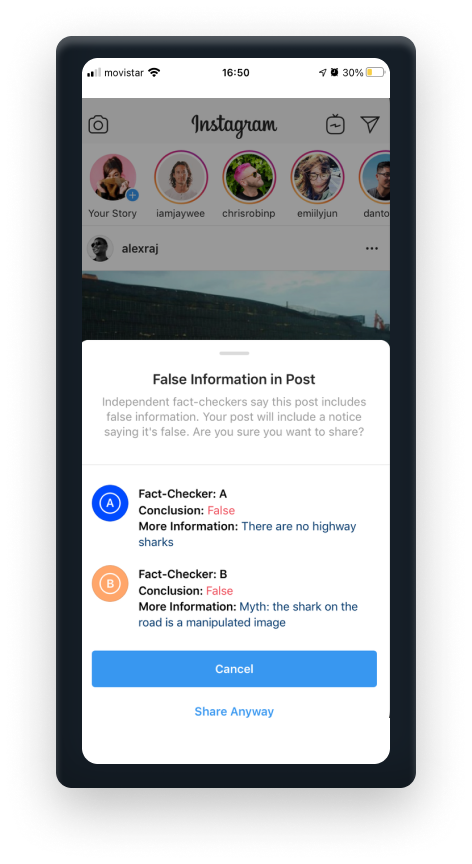
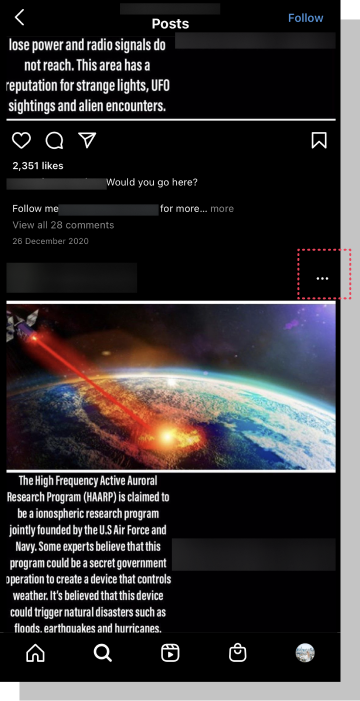
Instagram utilises Facebook’s fact-checking and works with 55 third-party fact-checkers covering over 45 languages across the globe who are independently certified through the non-partisan International Fact-Checking Network to help identify, review and label false information. The 3rd party fact checkers (humans) identify, review, and label false information.
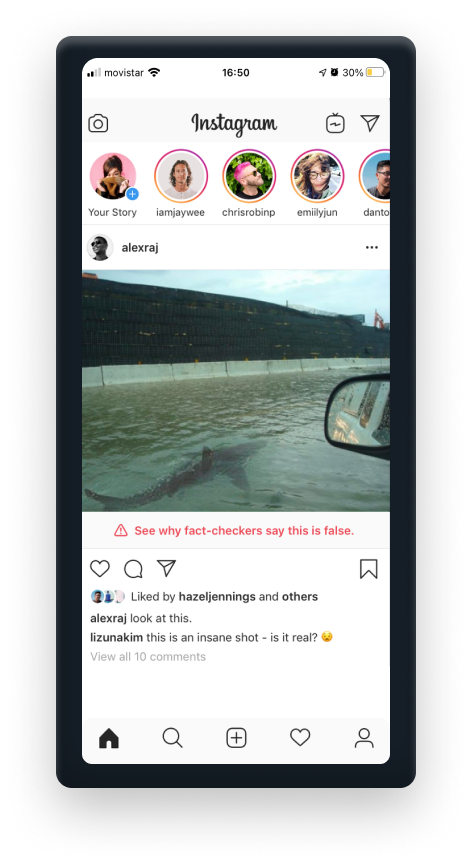
When content has been rated as false or partly false by a third-party fact-checker, Instagram reduces its distribution by removing it from Explore and hashtag pages, and reducing its visibility in Feed and Stories. In addition, it will be labelled so people can better decide for themselves what to read, trust, and share. When these labels are applied, they will appear to everyone around the world viewing that content – in feed, profile, stories, and direct messages.
Instagram uses image-matching technology to find further instances of this content and apply the label, helping reduce the spread of misinformation. In addition, if something is rated false or partly false on Facebook, Instagram will automatically label identical content if it is posted on Instagram (and vice versa). The label will link out to the rating from the fact-checker and provide links to articles from credible sources that debunk the claim(s) made in the post. Instagram makes content from accounts that repeatedly receive these labels harder to find by removing it from Explore and hashtag pages.
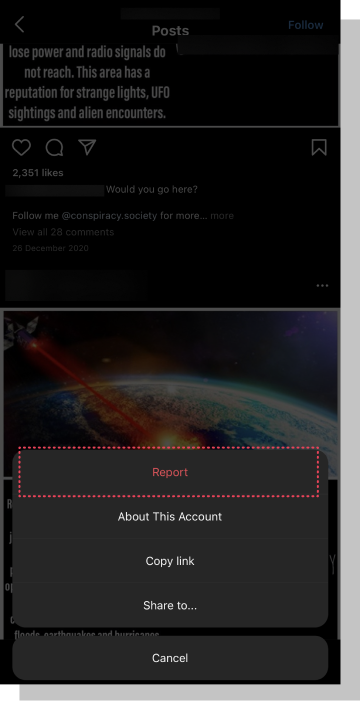
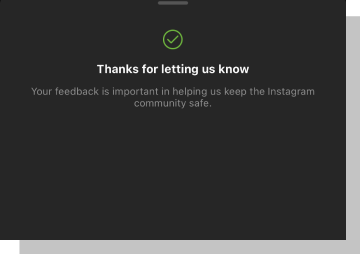
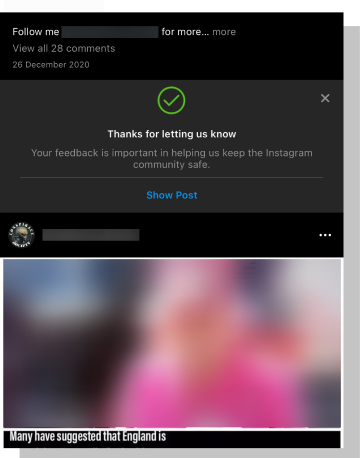
To determine which content should be sent to fact-checkers for review, Instagram uses a combination of feedback from our community and technology (AI). Instagram added a “False Information” feedback option, and these reports, along with other signals, help them to better identify and take action on potentially false information.
| QUICK FACTS | |
| Posts per minute | 1.3 mil |
| Fact-checking networks | 55 |
| Languages | 45 |
| SPAM | |
| Algorithm | Human |
| 99.9% | 0.1% |
| Fake Accounts | |
| Algorithm | Human |
| 99.8% | 0.2% |