Instagram Icon

Instagram

About the platform

Instagram is a Facebook owned photo and video sharing social networking service. The app allows users to upload media that can be edited with filters and organized by hashtags and geographical tagging. Posts can be shared publicly or with pre-approved followers. Users can browse other users' content and interact with it by ‘liking’ posts and following other users to add their content to a feed.

The PDF guide you can download below includes all the information described in the website. Feel free to share it!

DOWNLOAD PDF GUIDE
A crowd
Community guidelines icon

COMMUNITY GUIDELINES


Instagram shares a lot of it’s policies with it’s parent company Facebook. As such, the company states that they value and encourage authenticity, safety, privacy and dignity amongst their community.

The platform encorages users to self-police and give people control over their own experience by allowing them to block, unfollow or hide accounts and posts. Thi, in turn, trains the algorythm to currate future content according to user’s preferences.

  • Spam, scam or fraud
  • nudity or sexual activity
  • Violence
  • sale of illegal goods
  • bullying or harrasement
  • Intelectual property violation
  • self-harm
  • false information
Algorithm icon

THE ALGORITHM


Instagram’s algorithm is based on machine learning. The algorythm that lables posts is trained by a community of content moderators (people), so the way it ranks your posts is constantly evolving. The algorythm is trained to promote posts that will yield higher engagement, and reduce negative coments. But humans are needed to be part of this process because there have been very many cases where AI has wrongly miscategorized content and users got penalized for this.

Since Instagram switched from reverse-chronological ranking of content, which they used up until 2016, in favour of using their algorithm’s ranking, the average post is seen on average by 50% more followers.

Instagram’s Explore feed is generated by an algorhythm based on what the it predicts you are likely to interact with. It makes this prediction based on what you and profiles similar to yours have interacted with in the past.

Instagram Algorithm

Explore more about the other social media platforms:

Facebook Logo

GUIDE TO

FACEBOOK

Instagram Logo

GUIDE TO

INSTAGRAM

TikTok Logo

GUIDE TO

TIKTOK

TikTok Logo

GUIDE TO

TWITTER

Explore more about the other social media platforms:

CONTENT MODERATION

Content moderation

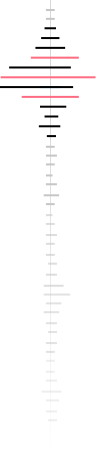
The nature of algorithms is such that it requires data to work with and human input to train it. By training the algorithm on your data, Instagram and it’s parent company Facebook, are able to predict what will and will not encourage you to engage with the content on their platforms. Both platforms depend on higher engagement in order to make a profit from the ads they post, and in order to keep you hooked to the screen for longer and show you more ads. The company is highly motivated to show you the content you’re most likely to be interested in. This is often referred to as “personalisation” - if the content is personalised to your interest -- prioritising your friends and family on your feed or those dog or cat videos you always double tap on -- the platform is able to increase the time you spend online in hopes you will see and interact with more ads .

DATA BEING MONITORED icon

DATA BEING MONITORED


Examples of data being monitored:

  • The Hashtags you use
  • The likes you get
  • What you share to other apps
  • What posts you save
  • Your caption text
  • The audio you use
  • the comments you get
  • THE VIDEO CONTENT
  • THE TEXT IN THE VIDEO
  • REPORT YOU MAKE AND RECEIVE
Telegram_IMG1_Algorithm
CONTENT MODERATION icon

CONTENT MODERATION


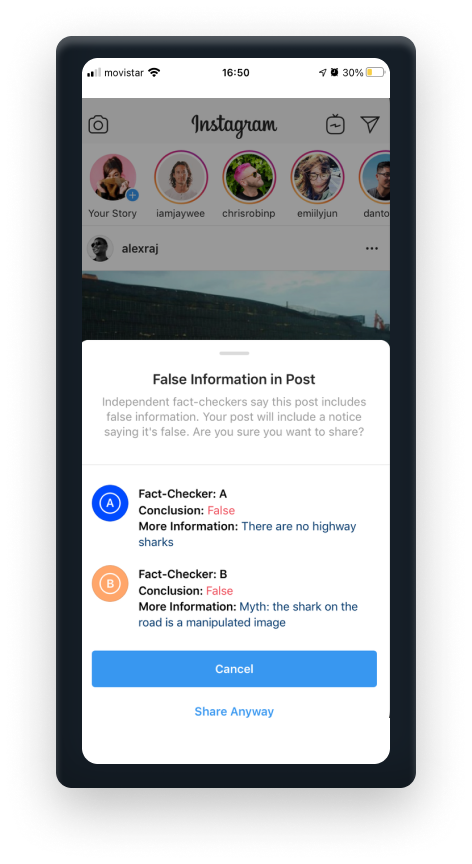
Instagram utilises Facebook’s fact-checking and works with 55 third-party fact-checkers covering over 45 languages across the globe who are independently certified through the non-partisan International Fact-Checking Network to help identify, review and label false information. The 3rd party fact checkers (humans) identify, review, and label false information.

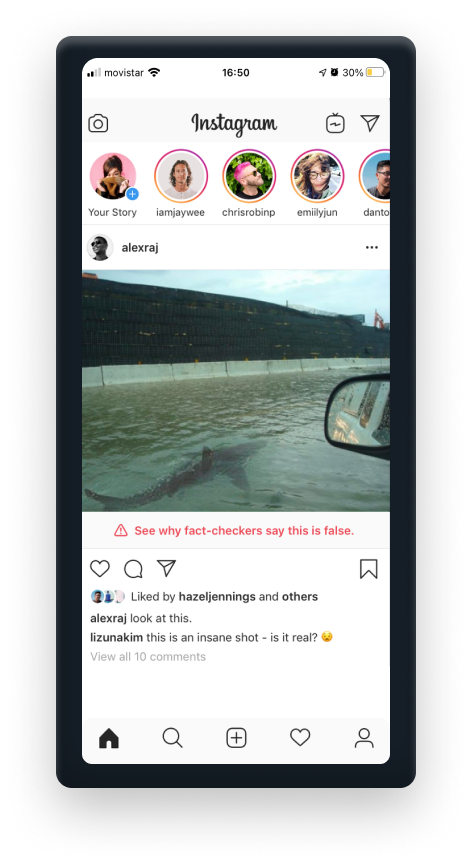
When content has been rated as false or partly false by a third-party fact-checker, Instagram reduces its distribution by removing it from Explore and hashtag pages, and reducing its visibility in Feed and Stories. In addition, it will be labelled so people can better decide for themselves what to read, trust, and share. When these labels are applied, they will appear to everyone around the world viewing that content – in feed, profile, stories, and direct messages.

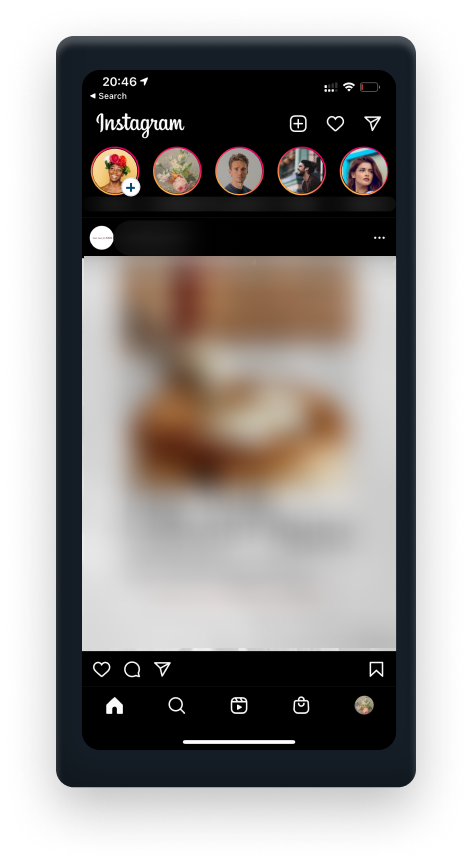
Content Moderation screenshot
Content Moderation screenshot 2
Content Moderation screenshot 3

Instagram uses image-matching technology to find further instances of this content and apply the label, helping reduce the spread of misinformation. In addition, if something is rated false or partly false on Facebook, Instagram will automatically label identical content if it is posted on Instagram (and vice versa). The label will link out to the rating from the fact-checker and provide links to articles from credible sources that debunk the claim(s) made in the post. Instagram makes content from accounts that repeatedly receive these labels harder to find by removing it from Explore and hashtag pages.

To determine which content should be sent to fact-checkers for review, Instagram uses a combination of feedback from our community and technology (AI). Instagram added a “False Information” feedback option, and these reports, along with other signals, help them to better identify and take action on potentially false information.

QUICK FACTS
Posts per minute1.3 mil
Fact-checking networks55
Languages45
SPAM
AlgorithmHuman
99.9%0.1%
Fake Accounts
AlgorithmHuman
99.8%0.2%

Explore more about the other social media platforms:

Facebook Logo

GUIDE TO

FACEBOOK

Instagram Logo

GUIDE TO

INSTAGRAM

TikTok Logo

GUIDE TO

TIKTOK

TikTok Logo

GUIDE TO

TWITTER

Explore more about the other social media platforms:

HOW TO REPORT CONTENT

How to report content

Keep in mind that your report is anonymous, except if you’re reporting an intellectual property infringement. The account you reported won’t see who reported them.

It is important to note that after reporting the content, it may still be visible to others. The report will be queued up to be assessed, but your feed will be altered.

Only after the content moderators have reviewed the post, if they find it to be violating the content guidelines, it will be removed.

CONTENT REPORTING icon

REPORTING


  • How to report content
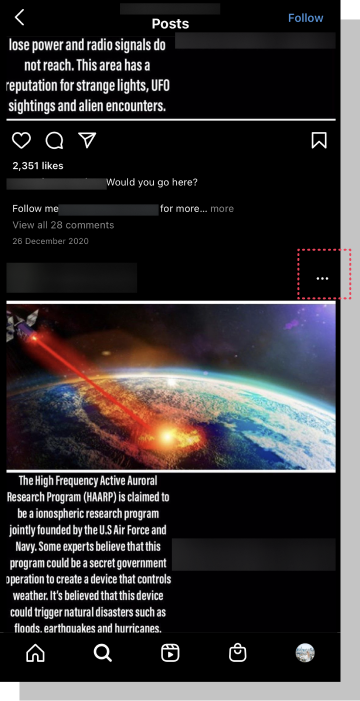
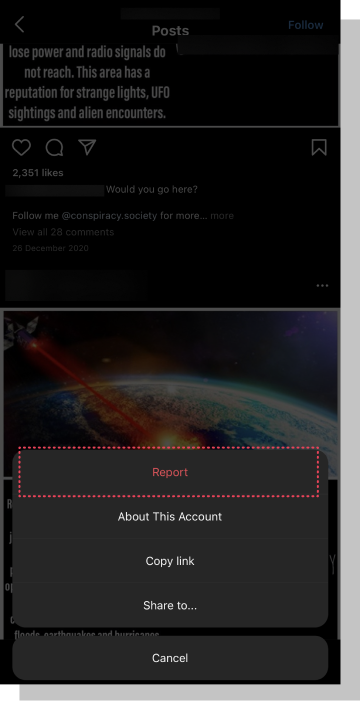
    1. Tap the three dots next to the post
    2. Tap the report button
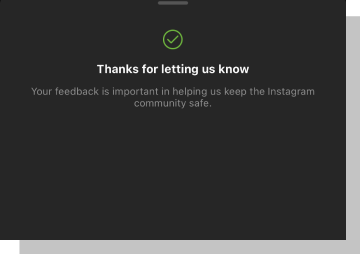
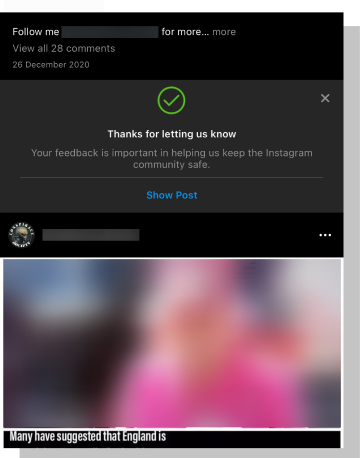
    3. Tap it’s inappropiate
    4. Scroll down and tap False information.
INSTA_IMG6_Reporting_Step1
INSTA_IMG7_Reporting_Step2
INSTA_IMG8_Reporting_Step3
INSTA_IMG9_Reporting_Step4
INSTA_IMG10_Reporting_Step5
INSTA_IMG11_Reporting_Step6

Explore more about the other social media platforms:

Facebook Logo

GUIDE TO

FACEBOOK

Instagram Logo

GUIDE TO

INSTAGRAM

TikTok Logo

GUIDE TO

TIKTOK

TikTok Logo

GUIDE TO

TWITTER

Explore more about the other social media platforms:

How to recover from a ban

HOW TO RECOVER FROM A BAN

If one or two accounts don’t like the message you’re delivering, they may report your posts, but that does not mean that your content will be banned for everyone. After fact-checkers and content moderaters review your post, if it violates platform guidelines, it will be removed.

Some false information ratings are eligible for appeal. You must submit a correction or dispute request within seven days of receiving a rating notification. Requests submitted after this period are not guaranteed to be picked up.

If you believe the fact-checkers’ rating is inaccurate, you can submit an appeal

CONTENT MODERATION icon

STEPS TO APPEAL


1

Tap to get to notifications

2

Tap on the false information notification

3

Tap on the Full fact-check

4

Tap to send an email directly to the third-party fact-checking organization to dispute your posts’ rating.

5

Use a correction template

INSTA IMG12 Recover 1 INSTA IMG13 Recover 2

You'll only have this option if your post is eligible for appeal.

Keep in mind, to dispute a rating, you must clearly explain why the original rating was inaccurate.


CORRECTION TEMPLATE

Hi [name],

I am writing in to correct a piece of content that was fact-checked on Facebook/Instagram [choose appropriate platform].

Key information: Your organization rated my/[Outlet Name] content, [link], as [rating] on [date].

The content was posted to this Page, [link]. For reference, the fact-check article provided is [link].

I have reviewed the fact-check and made the following changes:

[Details of changes] [Details of changes] [Details of changes]

I/[Outlet Name] believe these changes to be sufficient to remove the [insert rating type] that was applied to this content. Please let me know if you’re able to update the rating, or if you have any questions.

Thank you,

[Name]

[Outlet, Facebook Page or website name, if applicable]


Deleting a post will make it impossible for a fact-checker to process your correction.

Publishers must submit their correction or dispute within seven days of receiving a rating notification. We can't guarantee that appeals made after this one-week window will be processed by our fact-checking partners.

Fact-checkers are asked to initially acknowledge appeals within one working day of receiving the appeal. If your content is rated by multiple organisations, you may need to contact each fact-checker.

Accounts that repeatedly share false information and their posts won't appear in certain places on Instagram.

Explore more about the other social media platforms:

Facebook Logo

GUIDE TO

FACEBOOK

Instagram Logo

GUIDE TO

INSTAGRAM

TikTok Logo

GUIDE TO

TIKTOK

TikTok Logo

GUIDE TO

TWITTER

Explore more about the other social media platforms:

YOUR VOICE MATTERS

We are actively seeking your feedback and comments to our guide. Your contribution will help us built the information database to help people tackle issues of unfair cencorship.

If you want to share your personal cencorship story with us, be sure your story will be anonymized.

If you uncover a new content moderation policy or technique, please feel free to reach out and make platforms like ours aware of it.

info@gaait.policylabafrica.org